


 French
 Spanish
 Russian
: Tours and Excursion
History & Origins
The Rotunda of Saint George was built during the reign of Emperor Constantine the Great. It served as a Roman bath before being repurposed as a Christian church in the 6th century. The building has survived numerous invasions and reconstructions, making it a testament to Sofia's rich history.
During the Ottoman period, the rotunda was converted into a mosque, and its frescoes were plastered over. It was later restored to its Christian function after Bulgaria's liberation from Ottoman rule.
Today, the Rotunda of Saint George stands as a symbol of Sofia's enduring cultural heritage.
Architecture & Features
The rotunda is a circular structure with a dome, typical of early Christian architecture. Its walls are made of brick and stone, and the interior is adorned with intricate frescoes depicting biblical scenes.
The dome is supported by a series of arches, and the interior is illuminated by natural light streaming through small windows.
Legends & Facts
One legend claims that the rotunda was built on the site of a pagan temple dedicated to the Roman god Jupiter.
The frescoes inside the rotunda are considered some of the finest examples of medieval Bulgarian art.
The rotunda has been used as a church, a mosque, and even a storage facility throughout its long history.
Tourist Tips
Visitors should take their time to admire the frescoes and the architecture. The rotunda is best visited in the morning when the light is optimal for viewing the interior.
Nearby
- Saint Sofia Church: A historic church located just a short walk from the rotunda.
- Alexander Nevsky Cathedral: A stunning Orthodox cathedral known for its golden domes.
- National Archaeological Museum: A museum showcasing Bulgaria's rich archaeological heritage.
- Vitosha Boulevard: A bustling street lined with shops and cafes.
- Ivan Vazov National Theatre: A beautiful theatre building in the heart of Sofia.
Practical FAQ for Travelers
What are the opening hours?
The Rotunda of Saint George is open daily from 9:00 AM to 5:00 PM.
Is there an entrance fee?
No, entry to the rotunda is free of charge.
What is the best time to visit?
The best time to visit is in the morning when the light is best for viewing the frescoes.
Is the rotunda accessible for people with disabilities?
Yes, the rotunda is accessible for people with disabilities.
Are pets allowed inside?
No, pets are not allowed inside the rotunda.
Rotunda of Saint George: Private tours and Excursions.
-
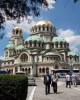
Culture and History tour in Sofia - Sofia tour
Discover Sofia – A Capital with Millennial Roots Embark on an immersion in the heart of Sofia, one of the oldest capitals in Europe, whose hist