


 French
 Spanish
 Russian
Private guide in Kandy, guided tours in Kandy, Sri Lanka
Top Attractions in Kandy
The Temple of the Tooth, Pinawela Elephant Orphanage, Royal Botanical Garden, Bahirawakanda temple, The Tea Museum, Udawatta Kele Royal Forest Sanctuary, Temples, Athur's seat, Imperial War Cemetery, Deveni Rajasinghe mawatha
Kandy
Sri Lanka
Language: English
Currency: Sri Lankan rupee (LKR)
Information about Kandy
Kandy is the spiritual capital of Sri Lanka—a historic city nestled among the hills of the Central Province, gracefully bordering an artificial lake created in the 14th century. Unlike Colombo, it has no metropolitan rush; unlike Anuradhapura, it has no ruins. Kandy is a living, breathing center of Buddhism, where each morning begins with the ritual offering at the Temple of the Sacred Tooth Relic, and evenings echo with traditional drumbeats and dance. It’s a place of power and harmony: hills soften the tropical heat, the lake mirrors temple roofs, and narrow streets carry the scents of spices, incense, and blossoms. Kandy isn’t just a stop on your itinerary—it’s the key to understanding the island’s soul.
The city draws pilgrims first and foremost, but also historians, culture lovers, families with children, and seekers of balance between the spiritual and natural. You may arrive for devotion but leave enchanted by the botanical gardens—home to 4,000 plant species—or by the Kandyan dance performance, where every gesture is a prayer. Kandy reveals itself slowly; it must be *listened* to—in the rustle of lotus petals, monks’ chants, the rhythm of drums. And to hear this polyphonic chorus, it’s wise to trust a private guide in Kandy.
- Temple of the Sacred Tooth Relic (Sri Dalada Maligawa) — the island’s holiest site, housing the left canine relic of the Buddha, with daily rituals and centuries-old traditions.
- Royal Palace of Kandy — an 18th-century complex including the Audience Hall, Temple of the Goddess Pattini, and museum displaying the golden crown of the last king.
- Peradeniya Botanical Garden — one of Asia’s most beautiful: 60 hectares featuring orchids, royal palm avenue, giant water lilies, and a tree planted by Thomas Edison.
- Gadaladeniya Temple — a rock-hewn temple with caves and a unique stone elephant bowing to the Buddha; offers the best panoramic view of Kandy and the lake.
- Kandy Lake — an 1807 man-made reservoir encircled by a promenade, fountains, and evening lights; ideal for sunset boat rides.
- Natha Devale — an active Hindu shrine with daily abhishekam (ritual bathing of deities) and floral garland offerings.
- Asgiriya Monastery — home to the mummified remains of a 19th-century monk and rare Pali manuscripts.
- Kandyan Art Association — a living center where traditional dance, drumming, mask-making, and metalwork are taught using ancient methods.
- Devon Falls — 15 km from town: a 97-meter cascade surrounded by tea estates and endemic birds.
Why in Kandy can you see the temple—but miss its soul—without a private guide?
The Temple of the Tooth is not merely a golden-roofed building. It’s a living organism: rituals passed through generations, a dance language where each movement is a mantra, and offerings where even petal color carries meaning. Without explanation, you’ll pass by unaware why monks carry the relic on their heads—not in hands—or why drums sound precisely at 18:30. Private guides in Kandy unveil these secrets: who may enter the innermost sanctum (only descendants of the ancient “Dias” lineage), how to read temple gate carvings, or where the “Ves” dance allegorically depicts the triumph of good over evil. They also arrange private meetings with mask masters or monastic chroniclers—experiences impossible without trust. Booking a private guide in Kandy may even grant access to the rare “Ranoli” ceremony—sand mandalas drawn before dawn and swept away at sunrise.
When is the best time to visit Kandy to balance comfort and festival participation?
February–April is ideal: dry, 26–30°C days, 18°C nights, minimal rain, clear mountain views. July–August hosts the “Esala Perahera” festival (10 nights of processions with dancers, elephants, and the relic), but book accommodations 6 months ahead. May–June and September–January may bring showers, but landscapes are lush and crowds thin. Avoid midday heat—seek shade. Best temple hours: before 10:00 (morning “Devosa Puja”) and after 18:00 (“Palle Arula”—oil lamp ritual).
What languages are spoken in Kandy, and can you manage without English?
Sinhala is primary. English is used in tourist zones. In temples and villages, only Sinhala—often with a local accent—is spoken. Russian is rare, though some monks know Pali and Sanskrit. Without translation, understanding rituals or arranging private visits is impossible. That’s why private guides in Kandy are essential—they don’t just translate, but explain why, for example, rice is tossed before temple entry—not sacrifice, but a symbol of ego dissolution.
Which local dishes in Kandy best capture its highland character?
Must-tries: Kandyan rice with 13 sambols (spicy accompaniments of vegetables, fish, and coconut), Wali Thel — bananas baked in banana leaf with honey and sesame, and Kiri Toss — sweet curd with palm syrup and coconut. Drinks include Rambé (vetiver-root decoction—cooling), Nange Kola (pomegranate-leaf and ginger infusion—energizing, caffeine-free), and “Nuwara Eliya Highland” tea—fresh from mountain estates, served in clay cups.
What can you buy in Kandy, and which souvenirs are prohibited from export?
Popular items: authentic hand-carved dance masks (not souvenirs—each with lineage), brassware, vacuum-sealed spices, English-language Buddhist texts, hand-packed tea, and sandalwood incense. Exporting uncertified relics (even “blessed soil”), live plants from the botanical garden, antiques (coins, manuscripts), or ivory is banned. All legal purchases include a declaration. Tip: buy masks from artisans at the Cultural Centre—each bears a name and story.
What clothing and footwear are required for Kandy’s sacred sites?
Temple entry demands modesty: covered shoulders and knees for all (men: long shorts or trousers; women: skirts/dresses below knee or sarongs). White attire is not mandatory but appreciated. Footwear is removed before each temple—bring light sandals and socks (stone floors may be cool or rough). A head covering isn’t required, but a silk scarf helps for especially sacred halls. For the botanical garden: closed shoes (many damp, narrow paths).
What currency is used in Kandy, and should you carry cash?
The Sri Lankan rupee (LKR). Temple entry is free; botanical garden: 1,500 LKR (foreigners). Cards are accepted at hotels and restaurants, but markets, artisans, and donation boxes require cash. Carry 2,500–4,000 LKR per person daily. Exchange bureaus exist, but rates are better in major cities. When booking with private guides in Sri Lanka, many costs (entrances, meals, transfers) can be bundled—convenient and scam-free.
What behavioral rules are strictly observed in Kandy?
Do not photograph the relic or monks without permission. Never point feet toward statues—even accidentally. Circumambulate temples clockwise only. Maintain silence inside sanctuaries; phones on mute. Remove footwear 5 meters before thresholds. Do not touch statues or reliquaries. Offer flowers only to the statue’s right hand. Greet monks with palms together at chest level and a slight bow.
How safe is Kandy, and what challenges might tourists face?
Kandy is among Sri Lanka’s safest cities: near-zero tourist-targeted crime, friendly police, and CCTV in temple zones. Main risks are mundane: dehydration, sunstroke, getting lost in alley labyrinths, and wild macaques near temple entrances (don’t feed). Children adapt well: botanical garden offers kid-friendly trails; the Cultural Centre hosts mask-making workshops; temples run “Dhamma Hours” with stupa drawing.
What to do in Kandy in the evening, and will children enjoy it?
Evenings offer lake boat rides, dinners in colonial mansions, Kandyan dance shows at the Cultural Centre, or hillside meditation under stars. For kids: papier-mâché mask crafting, “symbol hunts” (finding the 8 Auspicious Signs in carvings), feeding temple-pond carp, or creating sand mandalas guided by a monk.
Who lives in Kandy, what is the religious makeup, and what is the population?
Population: ~125,000. Predominantly Sinhalese Buddhists (75%), with Tamil Hindu (20%), Muslim, and Christian communities. Kandy is the cultural heartland of the Kandyan people—distinct in language, dance, dress, and cuisine. Over 200 monasteries form one of the island’s largest monastic communities.
What is the environmental situation around Kandy?
The city actively pursues green initiatives: single-use plastic bags banned since 2022, weekly tree-planting drives, and botanical garden programs conserving endemic species. Air is cleaner than Colombo’s, thanks to hills and greenery. Post-festival plastic waste remains a challenge. Tourists are invited to join the “Clean Temple” initiative: 30 minutes of grounds cleanup in exchange for a symbolic monastery donation receipt.
How to reach Kandy: which city and airport should you fly into?
The nearest international airport is Bandaranaike (CMB) near Colombo. From there: — Train (2.5–3 hours, one of the world’s most scenic routes—through tea estates and mountains), — Taxi/rental car (3 hours), — Bus (cheaper, slower). Domestic flights to Katunayake Airport (KTY) are impractical. Many private guides in Sri Lanka offer “airport–Kandy” transfers with stops at the botanical garden or tea factories. For deep immersion, trust a private guide in Kandy: they’ll craft not just a tour, but a meeting with the soul of an ancient kingdom.
Why is Kandy not “just another temple,” but the key to understanding Sri Lanka?
Because here, time, faith, and nature converge. A relic preserved for 1,700 years; a dance where every move is prayer; a garden with a tree planted by Edison. Kandy doesn’t demand awe—it asks for attention. And in that attention blooms what many truly seek in travel: the feeling that you’ve touched something eternal.
What are 5 reasons to visit Kandy?
- Witness the Sacred Tooth Relic emerge in a golden casket to drumbeats—and in that moment, feel how faith can move mountains.
- Walk through the botanical garden and find the tree Edison planted in 1898—and touch a living thread of science and diplomacy.
- Watch the “Ves” dance and realize: this isn’t performance, but a live reenactment of good triumphing over evil.
- Feel the lake breeze carry the scent of lotus, incense, and jasmine—and in that fragrance, hear the city breathe.
- Leave not a coin at the temple, but an intention—and take home not a souvenir, but a question you’ll seek to answer for life.
What are our travel tips for visiting Kandy?
- Ask your guide to bring you to the temple at 5:45 a.m.—the “Ud-Vasana” ceremony begins at 6:00, when monks chant and the inner sanctum doors briefly open for a glimpse of the reliquary.
- Buy jasmine petals from the grandmother at the temple entrance—she’ll show how to tie an offering garland (three loops: past, present, future).
- Visit “Lake View Bookshop” and ask for “lost chronicles”—the owner retrieves rare English-commentary editions of the “Mahavamsa.”
- Bring a small notebook—local poets in the botanical garden write free, heartfelt verses on “your feeling today.”
- Before departure, light one oil lamp at the temple—not as ritual, but as gratitude to a city that revealed itself slowly, and forever.

Private Guide in Kandy - Nandasena
(Member Since 2011) Excursions/tous in the following cities: Negombo Languages: EnglishI provide individual tours in Sri Lanka, would you travel with a private tour guide then you have come to the right place. I provide 1 day tours in Sri Lanka but also 2, 3, 5, 7 and 10 day tours. Visit Anuradhapura, Kandy, Galle, Sigiriya and Dambulla in a one day tour. Sri Lanka a land of culture and history of over 2500 years. The islands stunning beauty as observed from the sky is just a teaser of its many facetted attractions within a tiny area of 65,610 sq.km. Ancient monuments, captivating beaches and azure seas inviting you to swim and have fun.

Popular tours in Kandy
-
-
-
Private tour in Kandy
 Sri-Lanka Classic Tour 7 Days/6 Nights with 4/5 stars hotels
 Negombo, Nuwara Eliya, Kandy, Sigiriya, Polonnaruwa, Colombo
Tour Duration 950 Euros per person
 7 Days/6 Nights
-
-
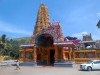 Hindu Temple, Kandy, Matale town
 Flower Garden, Kandy, Royal Botanical Garden
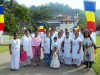 Indian Group tour, Kandy, In front of the tooth relic temple
 The Last Sinhalese Kingdom, Kandy, Tooth relic temple
 Fox flies, Kandy, Royal botanical garden
 Vegitable Market, Kandy, Kandy Market and Bazzar area
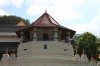 Tooth relic temple, Kandy, Tooth relic temple Kandy
 A foreign couple dress in Sri-Lanka traditional dresses, Kandy, Silk Factory