


 French
 Spanish
 Russian
Italy : Tours and Excursion
Late Antiquity Monuments of Ortygia
The Late Antiquity Monuments of Ortygia are a collection of historical structures located on the island of Ortygia, the historical center of Syracuse, Italy. These monuments date back to the late Roman and early Byzantine periods, showcasing the architectural and cultural transitions of the era.
History & Origins
Ortygia, the ancient heart of Syracuse, has been inhabited since the 8th century BCE. The late antiquity monuments reflect the island's significance during the Roman and Byzantine periods. Key structures include the ruins of ancient temples, early Christian catacombs, and remnants of Roman villas.
During the late Roman period, Syracuse was a major administrative and cultural center in Sicily. The monuments from this era highlight the blend of Roman engineering with emerging Christian influences. The Byzantine era further enriched the island's architectural heritage, with churches and public buildings adapted from earlier Roman structures.
The late antiquity monuments are a testament to the island's strategic importance and its role as a crossroads of Mediterranean cultures. The preservation of these sites offers invaluable insights into the daily life, religious practices, and urban development of the time.
Architecture & Features
The monuments feature a mix of Roman and early Byzantine architectural styles. Roman influences are evident in the use of arches, columns, and intricate mosaics, while Byzantine elements include the adaptation of Roman buildings into Christian worship spaces.
Key features include the remains of Roman villas with well-preserved floor mosaics, early Christian catacombs with frescoes, and the foundations of ancient temples repurposed during the Christian era. The materials used, such as local limestone and marble, reflect the island's natural resources and the craftsmanship of the period.
Legends & Facts
One notable legend associated with Ortygia is its connection to the Greek goddess Artemis, who was said to have bathed in the island's freshwater spring, Fonte Aretusa. The spring remains a popular attraction today.
Another fact is that the late antiquity monuments include some of the earliest Christian sites in Sicily, reflecting the island's role in the spread of Christianity in the Mediterranean.
The monuments also bear witness to the Arab conquest of Sicily in the 9th century, with some structures showing adaptations made during this period.
Tourist Tips
Visitors should start their exploration at the Archaeological Park of Neapolis, which provides context for the late antiquity monuments. A walking tour of Ortygia's historic center is the best way to appreciate these sites, with stops at key landmarks such as the Temple of Apollo and the Catacombs of San Giovanni.
Nearby
- Fonte Aretusa: A freshwater spring with mythological significance.
- Temple of Apollo: One of the oldest Doric temples in Sicily.
- Catacombs of San Giovanni: Early Christian burial sites with frescoes.
- Piazza del Duomo: A stunning Baroque square with the Cathedral of Syracuse.
- Manorce Castle: A medieval fortress with panoramic views of the island.
Practical FAQ for Travelers
What are the opening hours?
The monuments are generally open from 9 AM to 6 PM, but hours may vary by site.
Is there an entrance fee?
Some sites require a ticket, while others are free to visit. A combined ticket for multiple sites is available.
What is the best time to visit?
Early morning or late afternoon to avoid crowds and the midday heat.
Are the sites accessible for children?
Yes, but some areas may have uneven surfaces or stairs.
Is photography allowed?
Yes, photography is permitted, but flash may be restricted in some areas.
Are pets allowed?
Pets are generally not allowed inside the monuments.
Late Antiquity Monuments of Ortygia: Private tours and Excursions.
-
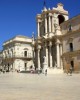
Culture and History tour in Siracusa - Half Day Walking Tour of Ortygia
"Alpheios’ sacred stream, precious gem of the great Siracusa, Ortygia, altar of Artemis" (Pindar, "The Nemean Odes") The island of Ortygia was
Quick tours search
Tour Categories
- Any tour category in Italy
- Arts and Crafts tour in Italy
- Boating and Sailing tour in Italy
- Culture and History tour in Italy
- Excursion in Italy
- Gourmet & Cooking tour in Italy
- Private tour in Italy
- Railway trip in Italy
- Shopping tour in Italy
- Sightseeing Nature tour in Italy
- Trekking tour in Italy
- Walking tour in Italy
- Wine tasting tour in Italy
Private Guide in Belgium

Mike
Private Guide in Brussels
40 years of tourism and hotel business experience. Private guide Mike is devoted to providing his guests with a memorable experience that exceeds all their expectations. Read more