


 French
 Spanish
 Russian
Private guide in Colombo, guided tours in Colombo, Sri Lanka

Colombo
Sri Lanka
Language: English
Currency: Sri Lankan rupee (LKR)
Information about Colombo
Colombo is not merely Sri Lanka’s capital, but a multifaceted metropolis where colonial heritage intertwines with vibrant modernity: 17th-century Dutch fort walls stand beside skyscrapers, Buddhist temples neighbor contemporary art galleries, and the quiet alleys of Pettah market coexist with designer boutiques in Cinnamon Gardens. It’s a city of paradoxes: you can breakfast in a 1890 colonial mansion, lunch at a vegan café amid tropical rain, and dine on a rooftop overlooking the Indian Ocean sunset. Colombo makes the perfect starting or ending point for an island tour—not overwhelming like ancient capitals, yet offering deep immersion into a living, breathing culture.
The city appeals to a wide range of travelers: urban explorers and street photographers, foodies, shoppers, architecture enthusiasts, and those seeking to understand contemporary Sri Lanka from within. There’s no single “main temple” or “tallest stupa”—instead, layers of stories accessible only to those who know how to look closely: in the tile patterns of the old post office floor, in a trilingual conversation at the next table, in the scent of cinnamon drifting from a delivery truck at an intersection. To decode these signs, consider hiring a private guide in Colombo.
- Fort and Pettah District — the historic core: ramparts, Dutch Hospital (now a dining-shopping complex), Central Market, and a maze of narrow lanes with goods for every taste.
- Gangaramaya Temple — one of the world’s most eclectic Buddhist complexes, blending traditional architecture, a museum with artifacts from 50 countries, and even a vintage car among its offerings.
- Viharamahadevi Park — Colombo’s largest urban park, featuring a lake, fountains, colonial Town Hall, and free morning yoga sessions.
- Jami Ul-Alfar Mosque — a striking red-and-white Indo-Saracenic landmark with intricately carved wooden doors and a dome visible from afar.
- National Museum of Sri Lanka — home to the royal golden chariot, ancient palm-leaf manuscripts, and the throne of the last King of Kandy.
- Galle Face Green (Galle Face Road) — a 500-meter oceanfront promenade where families, street performers, and coconut vendors gather each evening.
- Gowland Art Gallery — a private collection of contemporary Sri Lankan art, including works by Lester James Peries and George Keyt.
- Seema Malaka Temple — a serene Buddhist meditation temple built over Beira Lake, designed by Geoffrey Bawa.
- Kinsley’s Botanical Garden — a compact yet picturesque garden showcasing orchids, medicinal plants, and a “Tree of Life” sculpture crafted from intertwined roots.
Why is a private guide essential in Colombo to move beyond surface impressions?
Colombo is a city of context. Without explanation, you’ll walk past the Dutch Hospital unaware its walls are built from 17th-century ship ballast bricks. At Gangaramaya, you won’t grasp why a vintage Land Cruiser rests beside the Buddha’s relics. In Pettah, you won’t understand why one street sells only spices, the next only copper pots. Private guides in Colombo reveal these connections: who built a structure, how it survived the civil war, why a café opened there today. They also help navigate language barriers in markets and arrange meetings with local artists, chefs, and artisans—experiences inaccessible alone. Trusting a private guide in Colombo grants not just a route, but a key to the city’s code.
When is the best time to visit Colombo to avoid heavy rains and extreme heat?
December to March is ideal: dry season, 30–33°C, humidity under 70%, calm seas. April–May is hot (up to 36°C), but rainfall is rare—coinciding with “Aluth Avurudu” (Sinhalese New Year), when streets are decorated and parks host traditional games. June–September brings the southwest monsoon; brief afternoon showers occur, but the city remains functional. October–November is the second rainy peak, yet prices are lowest. Avoid travel from 12:00 to 15:00 year-round—heat and traffic are exhausting.
What languages are spoken in Colombo, and can you manage without English?
Official languages are Sinhala and Tamil. English is widely used in tourism, business districts, and transport—spoken by ~80% of taxi drivers, waitstaff, and vendors. However, in markets, temples, and residential areas, translation is essential: even signs are often in Sinhala script. Many older guides know Russian—especially those educated in the USSR or involved in Soviet-era projects on the island.
Which Colombo dishes best capture its culinary fusion?
Must-tries: Kottu Roti (chopped flatbread stir-fried with vegetables and egg, rhythmically “cooked” to a percussive beat), Lamprais — rice, meat, and sambols wrapped in banana leaf and baked in embers, and Vadai — crispy lentil fritters served with fiery coconut chutney. Drinks include Faluda (layered rosewater dessert drink with vermicelli and ice cream), Kirikopi (coconut milk coffee), and fresh tamarind juice with ice and salt.
What can you buy in Colombo, and what export restrictions apply?
Shopping ranges from luxury boutiques to bustling bazaars. Popular items: hand-dyed batik, brass and silverware, vacuum-sealed spices, English-language Buddhist books, Ayurvedic oils (in metal tins only), and contemporary designs from local labels (e.g., “Barefoot” or “Paradise Road”). Prohibited exports: uncertified Ayurvedic medicines, live plants without phytosanitary certificates, antiques (even 19th-century coins), corals, and tortoiseshell. Licensed shops provide customs declarations.
What clothing and footwear are recommended for exploring Colombo?
Light, breathable cotton or linen clothing. For temples: covered shoulders and knees (carry a sarong/scarf). In business districts (Fort, Cinnamon Gardens): shorts are acceptable, but not sleeveless tops. Footwear: secure sandals (not flip-flops—dusty streets and curbs), closed shoes only for upscale restaurants. A hat and sunglasses are essential. In monsoon season: compact umbrella and waterproof bag.
What currency is used in Colombo, and should you carry cash?
The Sri Lankan rupee (LKR). Cards are accepted nearly everywhere, but markets, tuk-tuks, and street performers require cash. Carry 3,000–5,000 LKR daily for small expenses. Exchange bureaus in Fort and Pettah operate until 18:00, offering better rates than the airport. When booking with private guides in Sri Lanka, many services (entrances, meals, transfers) can be pre-paid in USD—transparent and commission-free.
What behavioral etiquette matters in multicultural Colombo?
In temples: remove footwear in advance, avoid photographing worshippers, and don’t touch statues. In mosques and kovils: women should cover their heads. On streets: avoid pointing (especially at people), and never touch anyone’s head. In tuk-tuks: don’t shout “faster!”—say “please, no rush” instead. Accept gifts (flowers, fruit) with both hands. “Ayubowan” (hello) and “Istuti” (thank you) work better than any tip.
How safe is Colombo, and what practical challenges might tourists face?
Colombo is among South Asia’s safest capitals: low street crime, friendly police, and ubiquitous CCTV in the center. Main risks are mundane: taxi scams (always use the meter), pickpocketing during rush hour, dehydration, and getting lost in Pettah’s maze. Children adapt well: parks have playgrounds, museums feature interactive zones, and Galle Face offers free kite-flying with local volunteers.
What to do in Colombo in the evening, and is it family-friendly?
Evenings offer Galle Face strolls with street performances, rooftop dinners (e.g., “The Lighthouse”), jazz at “41” Bar, or indie films at “Regal” Art House. For kids: pony rides in Viharamahadevi Park, batik-painting workshops, “lantern hunts” in Kinsley’s Garden (evening lighting), or caffeine-free tea tastings at the “Tea Factory” experience.
Who lives in Colombo, what is the religious composition, and what is the population?
Metropolitan population: ~5.6 million. Ethnic groups: Sinhalese (75%), Tamils (15%), Moors (Muslims of Indian descent, 7%), Burghers (European descendants, 2%). Religions: Buddhism (70%), Hinduism (15%), Islam (10%), Christianity (5%). Colombo is the island’s most interfaith city: temples, mosques, churches, and kovils often share a single block.
What is the environmental situation in Colombo?
The city is modernizing infrastructure: single-use plastics banned since 2022, “green roof” and vertical garden projects launched, and bike-sharing via the “Yamu Bikes” app expanded. Challenges remain: traffic (avg. speed 12 km/h), noise, and dust. Humidity helps—air clears within an hour after rain. Tree-planting drives are frequent; tourists are invited to join the “My Colombo—Green” initiative.
How to reach Colombo: which airport and transport options?
Bandaranaike International Airport (CMB) lies 35 km north of the city center. Options: — Taxi (fixed rate 3,000–3,500 LKR, 45–60 min), — Prepaid transfer (via hotel or private guide in Sri Lanka), — Bus #187 to Fort (200 LKR, 1.5 hrs), — Train to Maradana Station (250 LKR, 1 hr, with transfer). Within the city, tuk-tuks are convenient (agree on price or insist on meter); car rental is discouraged due to traffic. For a first-time visit, a private guide in Colombo is ideal—they’ll not only show highlights but teach you to “read” the streets.
Why is Colombo not a “transit stop,” but a journey in itself?
Because here, you can live multiple eras in a single day: from colonial nostalgia to digital futurism, from spiritual contemplation to street chaos—and feel how they coexist in one space. Colombo doesn’t impress with scale, but captivates with detail. And it’s in those details that the soul of modern Sri Lanka resides.
What are 5 reasons to visit Colombo?
- Witness a Buddhist monk chatting on an iPhone beside a 17th-century wall—not ironically, but as a natural fact of life.
- Taste street-side “kottu roti” where the chef’s rhythmic spatula beats form the city’s unofficial soundtrack.
- Stroll Galle Face Green at dusk and realize: this isn’t just a promenade, but an open-air social forum.
- Find in a Pettah alley a spice shop wrapping goods in 1983 newspapers—and the owner recalls who won that year’s cricket match.
- Visit Gangaramaya Temple and discover not only relics, but a museum where the Buddha’s sandals rest beside a donated Mercedes.
What are our travel tips for visiting Colombo?
- Ask your guide to take you to Dutch Hospital at 7:30 a.m.—“Cafe Kumbuk” opens then, serving jazz-era breakfasts under antique arches.
- Buy jasmine petals from the elderly man at Seema Malaka’s entrance—he’ll show how to tie an offering garland (three loops: past, present, future).
- Visit “Stamford Books” and ask for “lost poetry”—the owner retrieves rare English-language anthologies by Sri Lankan poets, printed in 50-copy editions.
- Bring a small notebook—local poets in Viharamahadevi Park write free verses on “your feeling today,” handwritten from the heart.
- Before departure, light an oil lamp at a Buddhist temple—not as ritual, but as a gesture of gratitude to a city that revealed itself slowly, and forever.

Private Guide in Colombo - Amith
(Member Since 2014) Excursions/tous in the following cities: Colombo Languages: English, Italian"AYU-BO-WAN" Which means may you live long and this is our age old traditional way of welcome. I'm Amith and working as a Freelance National Tourist Guide Lecturer, Tour Operator and Trip advisor of Sri-Lanka in many years.
Popular tours in Colombo
-
-
-
Private tour in Colombo
 Sri-Lanka Classic Tour 7 Days/6 Nights with 4/5 stars hotels
 Negombo, Nuwara Eliya, Kandy, Sigiriya, Polonnaruwa, Colombo
Tour Duration 950 Euros per person
 7 Days/6 Nights
-
-
 Stilt fishermen, Colombo, Weligama
 Recling Buddha Statue, Colombo, Dambulla Rock Cave Temple
 Rainy tress Known as Giant Bonzai tress, Colombo, Tissa Lake, Tissamaharama
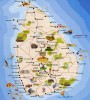 Sri-Lanka Tourist Map, Colombo, Sri-Lanka Tourist Map
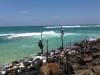 Stilt fishermen, Colombo, Weligama
 I"m with Italian ladies and MR: Martin, Colombo, Martin's Lodge, Sinharaja
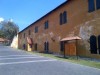 "Puk Huise" Protected wall as well as Store room, Colombo, Dutch Fortress, Galle
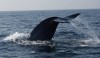 The Largest Mammal in the sea Blue whales, Colombo, Mirissa
