


 French
 Spanish
 Russian
Italy : Tours and Excursion
Altar of Hieron II
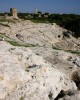
The Altar of Hieron II is a massive ancient altar located in the Neapolis Archaeological Park in Syracuse, Sicily. Built during the reign of Hieron II in the 3rd century BC, it was used for public sacrifices and ceremonies. The altar is one of the largest surviving structures of its kind from the Hellenistic period.
History & Origins
The Altar of Hieron II was constructed around 240-215 BC as part of Hieron II's ambitious building projects in Syracuse. It was designed to showcase the power and wealth of the city during its golden age. The altar was used for large-scale public sacrifices, particularly during the annual festival of Zeus Eleutherios.
The structure was partially destroyed during the Roman siege of Syracuse in 212 BC, but significant portions remain intact. Over the centuries, the altar was buried under layers of soil and debris, only to be rediscovered during archaeological excavations in the 19th century.
Today, the Altar of Hieron II is a key attraction in the Neapolis Archaeological Park, offering visitors a glimpse into the religious and civic life of ancient Syracuse.
Architecture & Features
The Altar of Hieron II measures approximately 198 meters in length and 22 meters in width, making it one of the largest altars of the ancient world. The structure was built using local limestone and featured a large central platform where sacrifices were performed.
The altar was adorned with decorative elements, including Doric columns and friezes, though many of these have been lost to time. The remaining structure provides valuable insights into the architectural techniques and religious practices of the Hellenistic period.
Legends & Facts
One of the most fascinating facts about the Altar of Hieron II is its sheer size. It is estimated that up to 450 oxen could be sacrificed simultaneously on the altar during major festivals.
Another interesting detail is that the altar was dedicated to Zeus Eleutherios, the god of freedom. This reflects Hieron II's efforts to position Syracuse as a free and independent city-state.
The altar's construction is also a testament to the advanced engineering skills of the ancient Syracusans, who were able to create such a massive structure without modern technology.
Tourist Tips
Visitors to the Altar of Hieron II should start their tour at the Neapolis Archaeological Park entrance, where they can also explore other nearby ruins. The site is best visited in the morning or late afternoon to avoid the heat.
Wear comfortable shoes, as the terrain can be uneven. Bring water and sunscreen, as there is limited shade.
Nearby
- Greek Theatre of Syracuse - An ancient theatre carved into the hillside, offering stunning views of the city.
- Latomia del Paradiso - An ancient limestone quarry with lush vegetation and historical significance.
- Roman Amphitheatre of Syracuse - A well-preserved Roman amphitheater used for gladiatorial games.
- Cathedral of Syracuse - A beautiful baroque cathedral built on the site of an ancient Greek temple.
- Museo Archeologico Regionale Paolo Orsi - A museum showcasing artifacts from Syracuse's ancient past.
Practical FAQ for Travelers
What are the opening hours?
The Altar of Hieron II is open daily from 9:00 AM to 6:00 PM.
Is there an entrance fee?
Yes, the entrance fee is 10 Euro for adults and 5 Euro for children.
What is the best time to visit?
The best time to visit is in the morning or late afternoon to avoid the heat.
Are there guided tours available?
Self-guided tours are available, and audio guides can be rented at the entrance.
Is the site accessible for wheelchair users?
Parts of the site are accessible, but some areas may be difficult to navigate due to uneven terrain.
Are pets allowed?
Pets are not allowed inside the archaeological park.
Altar of Hieron II: Private tours and Excursions.
-
Culture and History tour in Siracusa - A Full Day Walking Tour through the archaeology of Syracuse
Cicero described Siracusa as the greatest Greek city and the most beautiful of all (Verrine, II, IV, 117). Established in 733 BC by Corinthian settler
Quick tours search
Tour Categories
- Any tour category in Italy
- Arts and Crafts tour in Italy
- Boating and Sailing tour in Italy
- Culture and History tour in Italy
- Excursion in Italy
- Gourmet & Cooking tour in Italy
- Private tour in Italy
- Railway trip in Italy
- Shopping tour in Italy
- Sightseeing Nature tour in Italy
- Trekking tour in Italy
- Walking tour in Italy
- Wine tasting tour in Italy
Private Guide in Belgium

Mike
Private Guide in Brussels
40 years of tourism and hotel business experience. Private guide Mike is devoted to providing his guests with a memorable experience that exceeds all their expectations. Read more