


 French
 Spanish
 Russian
Morocco : Tours and Excursion
Attention!!! There are tours with discounts.
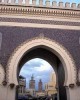
Bab Mansour gate
Bab Mansour gate is one of the most iconic landmarks in Meknes, Morocco. Built in the early 18th century by Sultan Moulay Ismail, it is considered a masterpiece of Moroccan architecture. The gate is adorned with intricate tile work, carved wood, and inscriptions, showcasing the craftsmanship of the era.
History & Origins
The gate was constructed between 1731 and 1732 by the architect Mansour Laalej, after whom it is named. It was originally intended to serve as the main entrance to the imperial city of Meknes, which Sultan Moulay Ismail envisioned as a grand capital.
The gate's design reflects the Almohad architectural style, characterized by its horseshoe arches and decorative motifs. It was built using materials sourced from the nearby Roman ruins of Volubilis, adding historical depth to its construction.
Bab Mansour gate has survived centuries of political and environmental changes, standing as a testament to Morocco's rich history and architectural heritage.
Architecture & Features
The gate is constructed primarily from stone and marble, with elaborate zellij tile work and carved plaster. Its massive size and symmetrical design make it a striking example of Islamic architecture.
The interior of the gate features a series of arches and columns, creating a sense of grandeur and space. The intricate geometric patterns and calligraphy adorning the walls are typical of Moroccan decorative arts.
Legends & Facts
One legend claims that Sultan Moulay Ismail executed the architect Mansour Laalej after the gate's completion to ensure that no other structure could rival its beauty.
The gate was once used as a ceremonial entrance for important visitors and dignitaries, symbolizing the power and prestige of the Sultanate.
Today, Bab Mansour gate is a popular tourist attraction and a symbol of Meknes' historical significance.
Tourist Tips
Visit the gate early in the morning or late in the afternoon to avoid crowds and capture the best lighting for photographs. Combine your visit with a tour of the nearby Mausoleum of Moulay Ismail and the Heri es-Souani granaries.
Nearby
- Mausoleum of Moulay Ismail: A stunning example of Moroccan architecture and the final resting place of Sultan Moulay Ismail.
- Heri es-Souani: Massive granaries and stables built during the reign of Moulay Ismail.
- Place el-Hedim: A lively square surrounded by historic buildings and cafes.
- Dar Jamai Museum: A museum showcasing Moroccan art and artifacts in a beautifully restored palace.
- Volubilis: Ancient Roman ruins located just outside Meknes.
Practical FAQ for Travelers
What are the opening hours?
Bab Mansour gate is accessible 24 hours a day, but the surrounding area is best visited during daylight hours.
Is there an entrance fee?
No, there is no fee to visit the gate.
What is the best time to visit?
Early morning or late afternoon for the best lighting and fewer crowds.
Is the site accessible for children?
Yes, the gate is easily accessible for families with children.
Are pets allowed?
Pets are allowed in the surrounding area but not inside the gate.
Is there a dress code?
Modest clothing is recommended out of respect for local customs.
Bab Mansour gate: Private tours and Excursions. Hurry up and book a tour with a discount.
-
Special Offer!
Private tour in Casablanca - Casablanca Private Morocco Tours
Day 1: Casablanca – Meknes – Volubilis – Fes. Day 2: Exploring Fes. Day 3: Fes – Ifrane – Azrou – Errachid -

Culture and History tour in Marrakech - From Tangier to Fes, Marrakech & Merzouga,...
Atlas Mountains, sophisticated Moorish culture and the complex soul of Morocco The Middle Atlas mountain region is in total contrast to the sophistic -
Special Offer!

Culture and History tour in Casablanca - Luxury Morocco tours
Marrakech is one of the four Moroccan imperial cities. Some people know it simply as the “Ochre City”. It is worth noting that it is consi -
Special Offer!

Culture and History tour in Casablanca - Marrakesh & The Kasbah trial
Day 1: Casablanca – Rabat: Upon arrival, we’ll collect you and drive to Casablanca where you’ll visit the Hassan II Mosque, the lar -
Walking tour in Fez - Imperial city - from Fez
Imperial cities are considered to be top tourist destinations in Morocco. It is actually true due to the fact that each of these four cities used to b
Quick tours search
Tour Categories
- Any tour category in Morocco
- Adventure tour in Morocco
- Arts and Crafts tour in Morocco
- Culture and History tour in Morocco
- Excursion in Morocco
- Expedition in Morocco
- Gourmet & Cooking tour in Morocco
- Hiking tour in Morocco
- Jeep tour in Morocco
- Private tour in Morocco
- Safari in Morocco
- Shopping tour in Morocco
- Sightseeing Nature tour in Morocco
- Walking tour in Morocco
Private Guide in Morocco

Mustapha
Private Guide in Marrakech
My name is Mustapha. I am your guide and will support you during the tour. I promise you are going to enjoy your stay here in Morocco. This is a beautiful, quiet country where ... Read more
Tour in Kenya
7-Day Explore Wildlife Samburu Great Rift Valley Lakes
Safari in Nairobi
Samburu National Reserve is situated about 350 kms north of Nairobi in the semi arid part of Kenya. Ewaso Nyiro River, bisects the reserve and the river is home to some of the biggest Reptiles in the region and attracts a good number of birds.
Read more