


 French
 Spanish
 Russian
Italy : Tours and Excursion
Greek Theatre of Syracuse
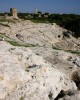
The Greek Theatre of Syracuse is an ancient theater carved into the rock of the Temenite Hill in Syracuse, Sicily. Dating back to the 5th century BCE, it is one of the largest and best-preserved ancient theaters in the world. The theater was used for theatrical performances and public gatherings and continues to host events today.
History & Origins
The theater was originally built in the 5th century BCE during the reign of Hieron I of Syracuse. It was later modified in the 3rd century BCE and again during the Roman period. The theater's design and construction reflect the advanced engineering skills of the ancient Greeks.
The theater was a central part of cultural life in ancient Syracuse, hosting performances of tragedies, comedies, and musical events. It was also used for political assemblies and public meetings.
Over the centuries, the theater underwent several modifications, particularly during the Roman period, when it was adapted for gladiatorial games and other spectacles. Despite these changes, the theater's original Greek design remains largely intact.
Architecture & Features
The theater is carved into the rock of the Temenite Hill and can accommodate up to 15,000 spectators. The seating area, known as the 'cavea,' is divided into sections by staircases and walkways, allowing for easy access to the seats.
The theater's acoustics are renowned for their clarity, allowing performers to be heard clearly from any seat. The stage area, or 'orchestra,' is circular and was originally used for choral performances.
Legends & Facts
One of the most famous legends associated with the theater is that it was the site of the premiere of Aeschylus' play 'The Persians,' performed in 472 BCE. While there is no definitive proof, the theater's historical significance is undeniable.
Another interesting fact is that the theater was used as a quarry during the Middle Ages, with many of its stones being repurposed for other buildings. Despite this, the theater's overall structure remains remarkably well-preserved.
Tourist Tips
Visitors should take the time to explore the seating area and the stage, which offer a fascinating glimpse into ancient theatrical performances. The panoramic views from the top of the theater are not to be missed.
Nearby
- Eurialo Castle: An ancient Greek fortification with impressive defensive structures.
- Neapolis Archaeological Park: A vast archaeological site featuring ancient Greek and Roman ruins.
- Cathedral of Syracuse: A stunning example of Baroque architecture built on the site of an ancient Greek temple.
- Ortigia Island: The historic heart of Syracuse, known for its charming streets and ancient ruins.
- Museo Archeologico Regionale Paolo Orsi: A museum showcasing artifacts from Syracuse's ancient past.
Practical FAQ for Travelers
What are the opening hours?
The theater is open daily from 9:00 AM to 6:00 PM.
Is there an entrance fee?
Yes, the entrance fee is 8 Euro for adults and 4 Euro for children.
What is the best time to visit?
Early morning or late afternoon to avoid the heat and crowds.
Are there guided tours available?
No, visitors explore the site independently.
Is the site accessible for people with disabilities?
Partial accessibility; some areas may be difficult to navigate.
Greek Theatre of Syracuse: Private tours and Excursions.
-
Culture and History tour in Siracusa - A Full Day Walking Tour through the archaeology of Syracuse
Cicero described Siracusa as the greatest Greek city and the most beautiful of all (Verrine, II, IV, 117). Established in 733 BC by Corinthian settler
Quick tours search
Tour Categories
- Any tour category in Italy
- Arts and Crafts tour in Italy
- Boating and Sailing tour in Italy
- Culture and History tour in Italy
- Excursion in Italy
- Gourmet & Cooking tour in Italy
- Private tour in Italy
- Railway trip in Italy
- Shopping tour in Italy
- Sightseeing Nature tour in Italy
- Trekking tour in Italy
- Walking tour in Italy
- Wine tasting tour in Italy
Private Guide in Greece
Angelo
Private Guide in Katerini
I can make your hiking, beach bar hopping and educational experience one of a kind! You will learn everything you ever wondered about this beautiful country. Read more