


 French
 Spanish
 Russian
Italy : Tours and Excursion
Latomia del Paradiso
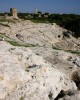
The Latomia del Paradiso is an ancient limestone quarry located in Syracuse, Sicily. It was used as a prison during ancient times and is now a significant archaeological site. The quarry is famous for its enormous caverns and lush vegetation, creating a unique blend of natural and historical elements.
History & Origins
The Latomia del Paradiso dates back to the 6th century BC when it was first excavated to provide stone for the construction of Syracuse. Over time, it became one of the largest quarries in the ancient world. During the Peloponnesian War, the quarry was repurposed as a prison for captured Athenian soldiers.
The quarry's name, 'Paradiso,' was given during the Renaissance due to its picturesque appearance. The site has been a point of interest for historians and archaeologists for centuries, offering insights into ancient quarrying techniques and the city's development.
In the 18th and 19th centuries, the quarry was partially filled in and transformed into a garden, further enhancing its natural beauty. Today, it stands as a testament to Syracuse's rich history and its role in the ancient Mediterranean world.
Architecture & Features
The Latomia del Paradiso is characterized by its towering limestone walls, some of which reach heights of over 30 meters. The quarry's most famous feature is the 'Ear of Dionysius,' a cavern with exceptional acoustics. Legend has it that the tyrant Dionysius used this feature to eavesdrop on prisoners.
The site also includes several other caverns and tunnels, many of which are now overgrown with vegetation. The combination of natural and man-made elements makes the Latomia del Paradiso a unique example of ancient engineering and natural beauty.
Legends & Facts
One of the most enduring legends associated with the Latomia del Paradiso is the story of the 'Ear of Dionysius.' According to tradition, the tyrant Dionysius used the cavern's acoustics to spy on his prisoners, listening to their conversations from a hidden chamber above.
Another interesting fact is that the quarry was once part of a larger network of latomiae (quarries) that supplied stone for much of ancient Syracuse. The stone extracted here was used to build some of the city's most iconic structures, including the Greek Theatre and the Temple of Apollo.
The quarry was also mentioned by the ancient historian Thucydides, who described it as a place of suffering for the Athenian prisoners during the Peloponnesian War.
Tourist Tips
Visitors to the Latomia del Paradiso should start their tour at the main entrance, where they can explore the 'Ear of Dionysius' and other notable caverns. The site is best visited in the morning or late afternoon to avoid the midday heat.
Wear comfortable shoes, as the terrain can be uneven and slippery in places. Bring water and sunscreen, as there is limited shade within the quarry.
Nearby
- Greek Theatre of Syracuse - An ancient theatre carved into the hillside, offering stunning views of the city.
- Neapolis Archaeological Park - A vast archaeological site featuring ruins from Syracuse's Greek and Roman periods.
- Cathedral of Syracuse - A beautiful baroque cathedral built on the site of an ancient Greek temple.
- Ortigia Island - The historic heart of Syracuse, known for its charming streets and waterfront.
- Museo Archeologico Regionale Paolo Orsi - A museum showcasing artifacts from Syracuse's ancient past.
Practical FAQ for Travelers
What are the opening hours?
The Latomia del Paradiso is open daily from 9:00 AM to 6:00 PM.
Is there an entrance fee?
Yes, the entrance fee is 10 Euro for adults and 5 Euro for children.
What is the best time to visit?
The best time to visit is in the morning or late afternoon to avoid the heat.
Are there guided tours available?
Self-guided tours are available, and audio guides can be rented at the entrance.
Is the site accessible for wheelchair users?
Parts of the site are accessible, but some areas may be difficult to navigate due to uneven terrain.
Are pets allowed?
Pets are not allowed inside the quarry.
Latomia del Paradiso: Private tours and Excursions.
-
Culture and History tour in Siracusa - A Full Day Walking Tour through the archaeology of Syracuse
Cicero described Siracusa as the greatest Greek city and the most beautiful of all (Verrine, II, IV, 117). Established in 733 BC by Corinthian settler
Quick tours search
Tour Categories
- Any tour category in Italy
- Arts and Crafts tour in Italy
- Boating and Sailing tour in Italy
- Culture and History tour in Italy
- Excursion in Italy
- Gourmet & Cooking tour in Italy
- Private tour in Italy
- Railway trip in Italy
- Shopping tour in Italy
- Sightseeing Nature tour in Italy
- Trekking tour in Italy
- Walking tour in Italy
- Wine tasting tour in Italy
Private Guide in Belgium

Mike
Private Guide in Brussels
40 years of tourism and hotel business experience. Private guide Mike is devoted to providing his guests with a memorable experience that exceeds all their expectations. Read more